Side-by-side specs · checked October 2026
Crutch comparison chart: 5 forearm crutches, spec for spec
Weight, rated capacity, handle type, cuff style and frame material for the 5 forearm crutches that score highest on our rubric. Every figure comes from the maker's own listing, so where a maker publishes nothing you get a dash rather than a guess.
Disclosure: As an Amazon Associate we earn from qualifying purchases. Affiliate commissions never change our scores or rankings.
Compare the specs
The five forearm crutches that score highest on our rubric and publish the specs people actually compare. Turn a model off to compare fewer, switch the units, or open a spec label to see why that row matters.
5 models, side by side. Swipe the table sideways to see them all.
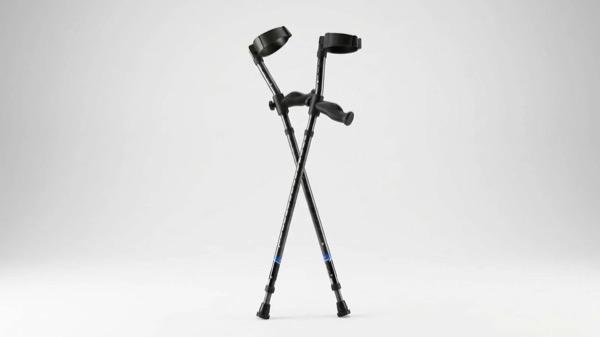
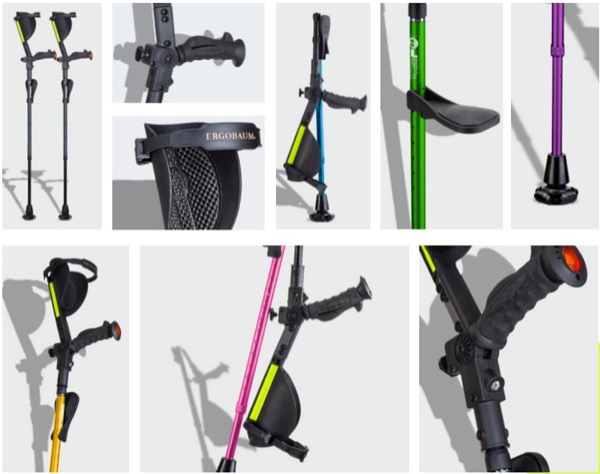
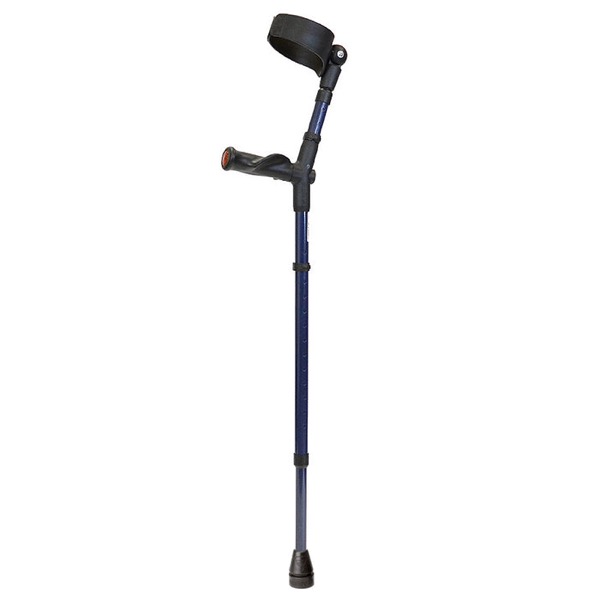
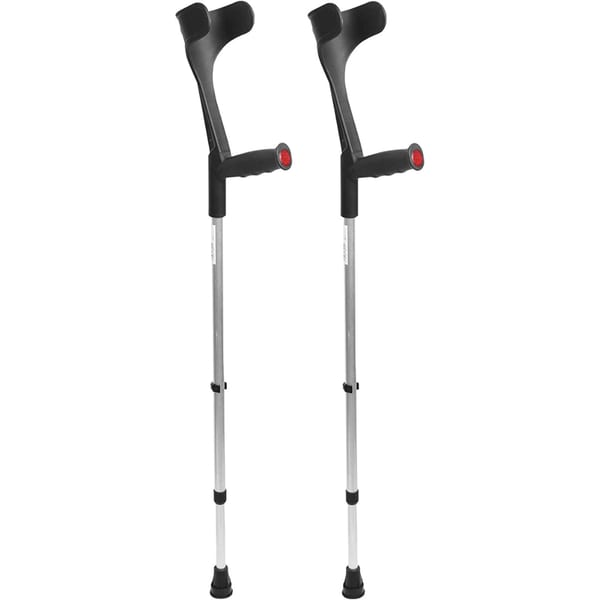
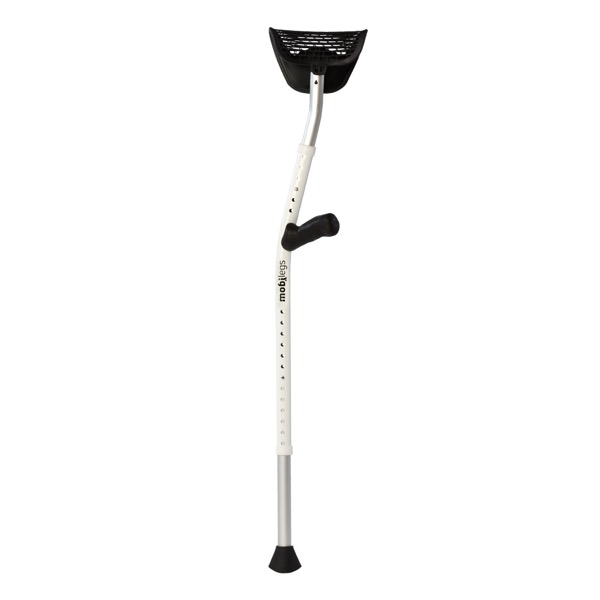
| Specification | In-Motion Pro Forearm Crutches Millennial Medical Best for long-term use Your match | Ergobaum 7G Forearm Crutches Ergoactives Best for recovery Your match | Walk Easy Model 495 Forearm Crutches Walk Easy Your match | KMINA Aluminum Forearm Crutches KMINA Your match | Mobilegs Ultra Crutches Mobilegs Your match |
|---|---|---|---|---|---|
Fit ScoreAn equal-weight rubric across comfort, durability, portability, adjustability and value, built from each model’s documented specs. It is an editorial rating, not a hands-on test result. | 8.4 / 10 Top score here | 7.8 / 10 Top score here | 7.2 / 10 Top score here | 7.4 / 10 Top score here | 6.8 / 10 Top score here |
Weight (each)One crutch, as published by the maker, never the shipping weight (which includes packaging and usually covers the pair). You lift each crutch thousands of times a day, so this is the spec long-term users raise first. | 1.8 lb Lightest here | 2.9 lb Lightest here | 1.7 lb Lightest here | 1.1 lb Lightest here | 2.0 lb Lightest here |
Weight capacityThe maximum user weight the maker rates the crutch for, which is a different number from what the crutch itself weighs. If a rated capacity is what rules models out for you, our heavy-duty crutch guide covers the higher-rated models in more depth. | 350 lb Highest here | 360 lb Highest here | 300 lb Highest here | 275 lb Highest here | 300 lb Highest here |
Handle typeGrip geometry is what sets your wrist angle. An angled or left/right-specific grip holds the wrist closer to neutral than a symmetric padded one, which is the difference people notice over a long recovery rather than a short one. | Angled ergonomic grip (~24°) | Padded ergonomic grip, angle adjusts 15°/0°/−15° | Anatomic left/right soft rubber grip, latex-free | Padded washable polypropylene grip | Ergonomic handgrip with saddle arm support |
MaterialEvery model here is aluminium, so this row rarely decides anything on its own. What separates them is wall thickness, bracket reinforcement and tip design rather than the alloy itself. | Aluminum | Medical-grade aluminum | Aluminum | Aluminum | Aluminum |
Cuff styleAn open (half) cuff is quicker to slip your arm out of, which matters getting in and out of a car. A full-circle cuff holds the crutch on your arm when you let go of the grip. It is a trade between quick release and hands-free security, not a better-and-worse. | Open cuff, ergonomic handle | Full-circle, ergonomic | Full cuff, anatomic grip | Open cuff, ergonomic grip | Saddle-style hand support, rocker feet |
Fits heightsThe range covers the variant our buy link points to, not every SKU a maker sells. Forearm sizing follows handle height rather than body height, so measure floor-to-hip before ordering; our crutch size calculator walks through it. | 4'2"–5'5" (Short) / 5'3"–6'8" (Tall) | 5'0"–6'6" | 5'0"–6'5" | Adult, 11 height settings | 4'9"–6'4" |
FoldsDecides whether they fit a car boot, an aircraft cabin locker, or a corner out of a walkway at home. It is the spec people wish they had checked, rather than the one they check first. | Yes | Yes | No | No | No |
Best forOur editorial read on who each model suits, from its spec profile and the segment it is built for. It is the row the fit finder below this chart leans on hardest, and a starting point rather than a restriction. | Long-term daily use | Post-surgery recovery | Post-surgery recovery | Buying for a parent | Post-surgery recovery |
| Where to buy | In-Motion Pro Forearm Crutches Buy at Millennial Medical (In-Motion Pro Forearm Crutches) Read the full review | Ergobaum 7G Forearm Crutches Check price on Amazon (Ergobaum 7G Forearm Crutches) Read the full review | Walk Easy Model 495 Forearm Crutches Check price on Amazon (Walk Easy Model 495 Forearm Crutches) Read the full review | KMINA Aluminum Forearm Crutches Check price on Amazon (KMINA Aluminum Forearm Crutches) Read the full review | Mobilegs Ultra Crutches Buy at Mobilegs (Mobilegs Ultra Crutches) Read the full review |
An em-dash means the maker does not publish that figure, so we leave it blank rather than estimate it. "Lightest here" and "Highest here" compare only the columns currently shown. Fit Scores are our editorial rating from documented specs, not hands-on results. Prices change, so the buttons open the current listing. How we make money.
Find your fit
Three questions, one crutch to look at first
Every answer is scored against the same published specs in the chart above, and the result names the facts that decided it. Not medical advice: confirm your crutch choice and fitting with your clinician.
Best match
Disclosure: this pick is made by Millennial Medical, which also operates this site. It is scored on the same rubric as every other model here, and the runners-up below are one click away.
Also close
Want all five ranked, underarm crutches included, and a copy to keep? Take the full quiz, which asks for an email at the end so it can send one.
This finder needs JavaScript. The full crutch quiz asks five questions, covers underarm crutches as well as forearm, and works without it.
How we compare
Every figure traces to a source
Specs come from the maker's own listing where one exists, with the source recorded next to the value in our catalog. Where nobody publishes a figure the cell shows an em-dash instead of an estimate.
Weight is one crutch
All of these ship as a pair. We list the single-crutch weight, because that is the number you lift with every step. Package and shipping weights include the box and usually cover both crutches, so they are never used here.
Fit Scores are editorial
An equal-weight rubric across comfort, durability, portability, adjustability and value, built from documented specs rather than hands-on results. How we score sets out exactly what goes into it.
How to read this chart
Start with the row that matches your constraint, not with the top-ranked column. If you are on crutches all day, read Weight (each) first and treat the rest as tie-breakers. If a rated capacity is what rules models out, read Weight capacity first, then see our heavy-duty crutch guide for the models rated highest. If your hands or wrists are the problem, Handle type and Cuff style are the two rows that describe where the load actually lands, and crutches that don't hurt your hands goes deeper on it. Before you order anything, the crutch size calculator checks the model against your own measurements.
Want the underarm side instead, or a wider field? See underarm crutches, the full forearm crutch rankings, or the head-to-head matchups if you have already narrowed it to two. If cost or reimbursement is the sticking point, start at our crutch coverage and reimbursement guide.
Frequently asked questions
How much does a forearm crutch weigh?
Across the models on this chart, a single forearm crutch runs from about 1.1 lb to 2.9 lb. Aluminum pairs cluster near 1.5 to 2 lb each, and models that add a spring or shock mechanism sit at the heavier end because that hardware has to go somewhere. Manufacturers usually publish the figure per crutch, not per pair, so a pair is roughly double the number shown here.
Does a lighter crutch actually matter?
It depends on how far you walk. Over a short recovery the difference between a 1.7 lb and a 2.9 lb crutch is hard to notice. Over months of daily use you lift each crutch thousands of times a day, so a pound per side is a real difference in how tired your arms and shoulders feel by evening. Weight is also the spec most often traded away for shock absorption, so read it next to the comfort features rather than on its own.
What is the difference between an open cuff and a full cuff?
An open (or half) cuff wraps part of the way around your forearm so you can slip your arm out quickly, which is easier for getting in and out of a car or reaching for something. A full cuff closes further around the arm and holds the crutch on you when you let go of the grip, which is steadier but slower to get out of. Neither is better in general; it is a trade between quick release and hands-free security.
Is weight capacity the same as the crutch weight?
No, and the chart shows them as two separate rows for that reason. Weight capacity is the maximum user weight the maker rates the crutch for. Weight (each) is what the crutch itself weighs. If capacity is your deciding factor, our heavy-duty crutch guide covers the higher-rated models in more depth.
Why do some cells show a dash?
Because the manufacturer does not publish that figure. Every number on this chart is taken from a maker or retailer listing, so where nobody states a value we leave it blank instead of estimating one. A dash means unpublished, not zero and not unknown quality.
How does the fit finder pick a crutch?
It scores the same published specs shown in the chart against your three answers, then names the facts that decided it. How long you will be on crutches is matched to the segment each model is built for, what bothers you most is matched to grip geometry, documented shock absorption or crutch weight, and a need to fold is matched to whether the model folds. It is a shortcut into the chart rather than a clinical assessment. For a wider ranking that also covers underarm crutches, our full crutch quiz asks five questions and emails you a copy of the result.
Free guide
Get the long-term crutch shortlist
The models that hold up to daily use over years, and the specs that separate them. Free. Unsubscribe anytime.