Buying guide · Updated October 2026
The Best Forearm Crutches of October 2026: Our Top Pick Is In-Motion Pro Forearm Crutches
Forearm crutches beat the underarm hospital pair for almost anyone using them more than a few weeks: they sit clear of the armpits and let you release your grip without dropping them. But the right pair depends on whether you’re recovering from surgery, on them every day, or buying for a parent. Here are our scored picks.
Disclosure: As an Amazon Associate we earn from qualifying purchases. Affiliate commissions never change our scores or rankings. Details.
Top Picks at a Glance: Key Specs
| Product | Handle Style | Wrist Angle | Shock Absorption | Weight Capacity |
|---|---|---|---|---|
| In-Motion Pro Forearm Crutches | Angled ergonomic grip (~24°) | ~24° | Yes | Up to 350 lb |
| Ergobaum 7G Forearm Crutches | Padded ergonomic grip, angle adjusts 15°/0°/−15° | 15°/0°/−15° | Yes | Up to 360 lb |
| smartCRUTCH Forearm Crutches | Memory-foam grip on a pivoting forearm platform | — | — | Up to 265 lb |
| Thomas Fetterman Carbon Fiber Forearm Crutches | Anatomic left/right grip, antimicrobial latex-free rubber | — | — | — |
| KMINA Aluminum Forearm Crutches | Padded washable polypropylene grip | — | No | Up to 275 lb |
| Crutch | Fit Score | Best for | Weight cap. | Foldable | Buy |
|---|---|---|---|---|---|
| In-Motion Pro Forearm Crutches Best for long-term use Millennial Medical | 8.4/10 | Long-term daily use | 350 lb | Yes | Visit site |
| Ergobaum 7G Forearm Crutches Best for recovery Ergoactives | 7.8/10 | Post-surgery recovery | 360 lb | Yes | Check price |
| smartCRUTCH Forearm Crutches smartCRUTCH | 7.6/10 | Long-term daily use | 265 lb | No | Visit site |
| Thomas Fetterman Carbon Fiber Forearm Crutches Lightest Thomas Fetterman | 7.6/10 | Long-term daily use | — | Yes | Visit site |
| 7.4/10 | Buying for a parent | 275 lb | No | Check price | |
| Walk Easy Model 495 Forearm Crutches Walk Easy | 7.2/10 | Post-surgery recovery | 300 lb | No | Check price |
| Mobilegs Ultra Crutches Mobilegs | 6.8/10 | Post-surgery recovery | 300 lb | No | Visit site |
| Drive Medical Steel Forearm Crutches Best value Drive Medical | 6.8/10 | Best on a budget | 300 lb | No | Check price |
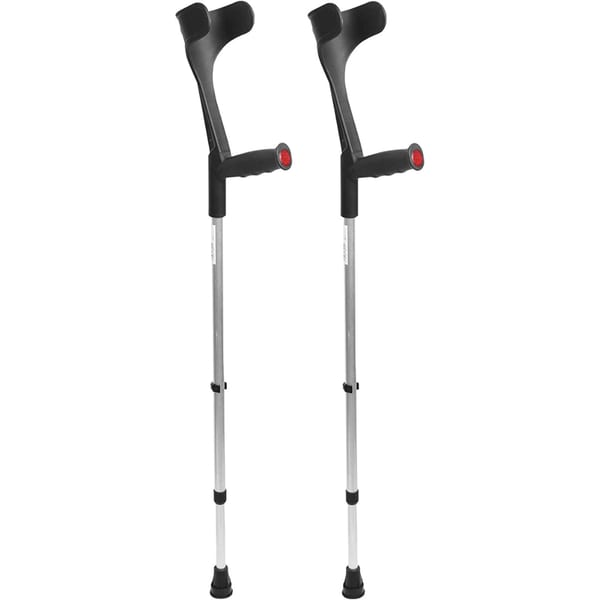
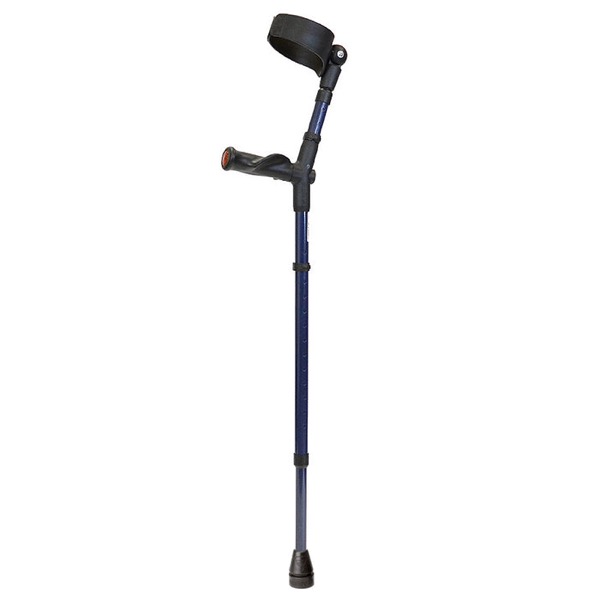
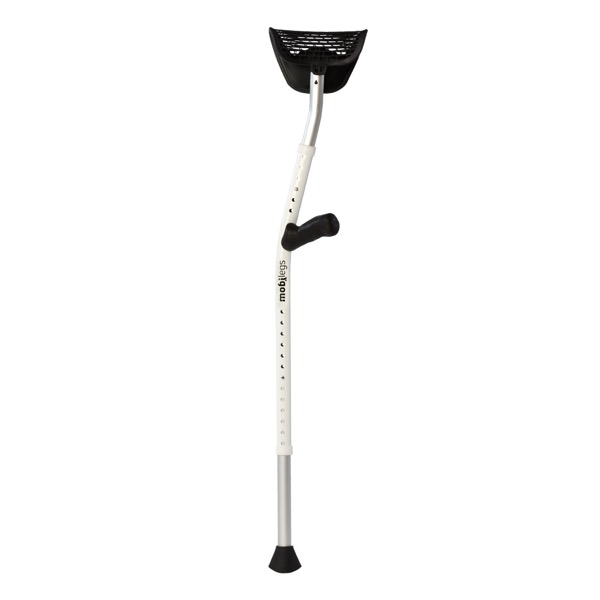
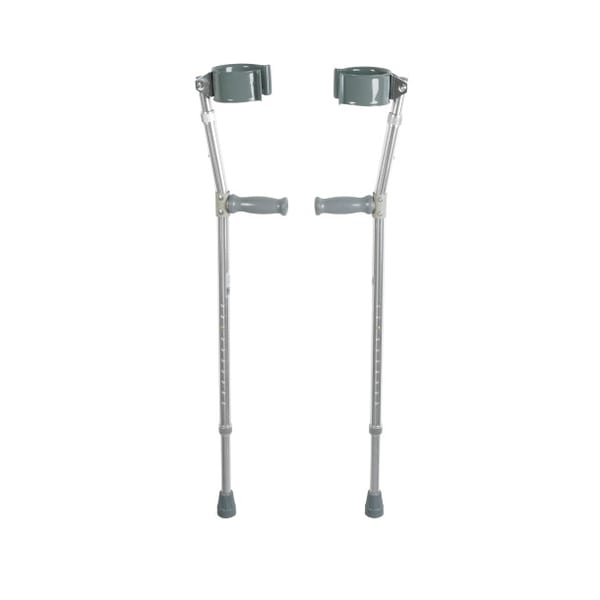
Prices and availability change; "Check price" opens the current Amazon listing and "Visit site" opens the manufacturer's store.
Quick quiz
Not sure which of these fits you?
Answer a few questions and get matched to the right forearm crutch for your situation — weight, shock absorption, and long-term fit.
The picks, scored
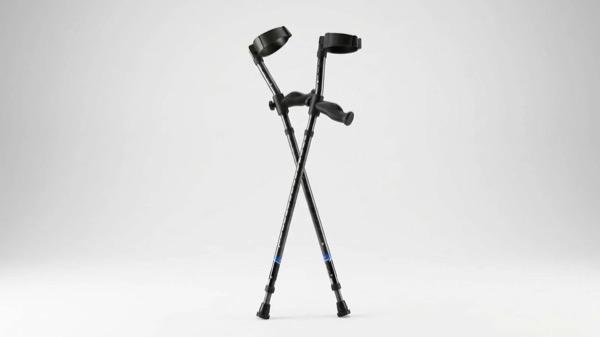
The strongest pick for people on forearm crutches every day. The spring-assist and ergonomic handle focus on the comfort points (hand and shoulder load) that make standard crutches tiring over months of use.
- Spring-assist mechanism absorbs shock through each step
- ~24° ergonomic handle angle keeps the wrist closer to a neutral position
- Articulating tips keep contact flat through the full stride
- Carries the HCPCS E0110 code for insurance reimbursement
- Premium price vs. basic aluminum pairs
- Heavier than bare-bones models due to spring mechanism
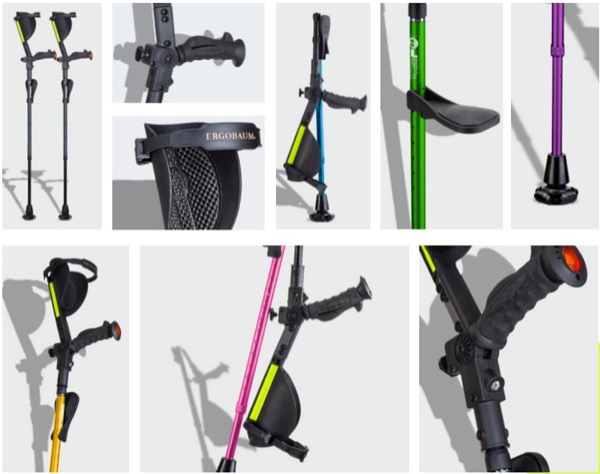
Loaded with recovery-focused extras. A strong choice while you are non-weight-bearing after surgery and want maximum comfort and stability.
- Shock absorbers plus knee/leg-rest accessory for non-weight-bearing recovery
- Built-in LED light and reflective safety strip
- High weight capacity
- Bulkier than minimalist crutches
- More moving parts to maintain
smartCRUTCH Forearm Crutches
smartCRUTCH · Long-term daily use
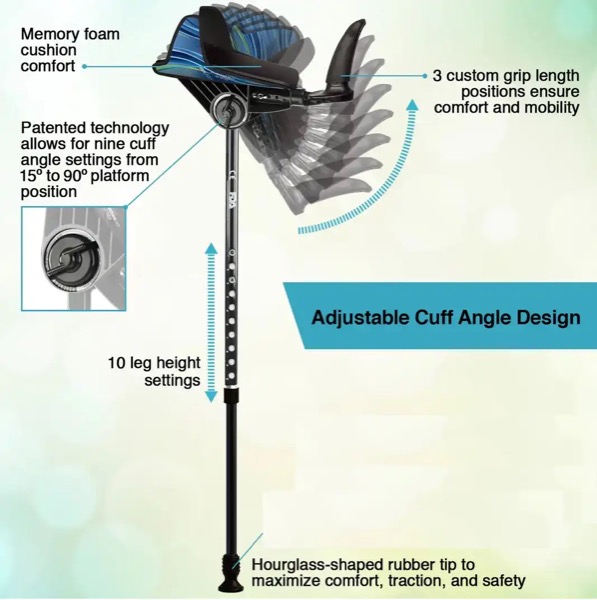
Best when wrist load is the main complaint and you want to dial in the forearm angle. Strong personalization, premium price.
- Forearm platform angle adjusts to spread load off wrists
- 20+ color options for personalization
- Good for users who want a customized fit
- Sized in ranges; getting the right fit matters
- Premium pricing
The pick when weight is your top priority. Carbon fiber makes these noticeably lighter than aluminum, which matters most to people on crutches all day, and they fold down to a compact 22 inches. The trade-off is a premium, made-to-order price.
- Carbon fiber keeps each crutch very light, which adds up over thousands of steps a day
- Folds in half to a compact 22 inches for travel and storage
- Tornado Air tips grip well across varied and uneven surfaces
- Anatomical left/right grips in soft, latex-free rubber
- Premium price, sold direct rather than on Amazon
- Made to order: allow 2 to 3 weeks for delivery
- Carbon fiber costs more to replace if damaged
KMINA Aluminum Forearm Crutches
KMINA · Buying for a parent
A comfortable mid-priced option that is easy to recommend when buying for an aging parent who wants stability without a premium price.
- Anatomical grips reduce hand pressure
- Good value for the comfort level
- Stable wide tips
- Not foldable
Walk Easy Model 495 Forearm Crutches
Walk Easy · Post-surgery recovery
A light, comfortable anatomic-grip crutch at a fair price. A sensible middle option for recovery if you want low weight and an easy-on-the-hands grip without premium shock absorption.
- Very light at about 1.7 lb per crutch
- Anatomic grip eases hand and wrist pressure
- Full cuff stays on your arm; grip reflectors add safety
- Does not fold
- Basic shock absorption vs. premium models
Mobilegs Ultra Crutches
Mobilegs · Post-surgery recovery
A comfort-oriented design with a saddle grip that spreads load across the hand. A solid recovery pick if portability is not your priority.
- Articulating foot and saddle hand-grip spread contact across more of the hand
- Comfort-first ergonomic design
- Less compact for travel
- Mid-to-premium price
The budget workhorse. If you need a functional forearm crutch for short-term or occasional use and price is the priority, this does the job.
- Inexpensive and widely available
- Light for a steel crutch at about 2.5 lb each
- Vinyl contoured hand grips
- Basic ergonomics; no shock absorption
- Less comfortable for all-day use
How to choose a forearm crutch
Our picks are scored on a five-category rubric (comfort, durability, portability, adjustability, value) applied the same way to every product. FitScores are editorial estimates based on documented manufacturer specs, not hands-on lab tests. We update the ranking as new products and specs become available. How we score →
Cuff style: hinged vs. full-circle
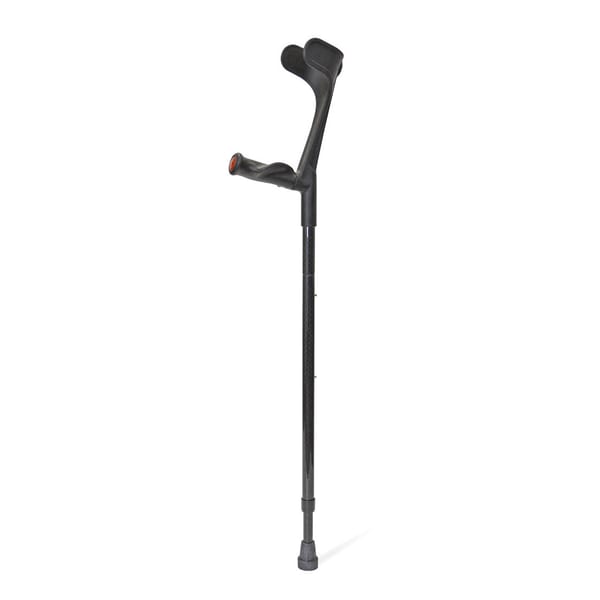
Full-circle cuffs wrap all the way around your forearm so the crutch stays on even when you let go of the grip, good for daily users who set crutches down often. Hinged (open) cuffs pivot with your arm for a more natural stride and are easier to get in and out of.
Material: aluminum vs. carbon fiber
Most forearm crutches are aluminum: affordable, durable, and weather-resistant. Carbon fiber is noticeably lighter and still strong, but costs more. If you’ll carry or travel with them a lot, the weight savings can be worth it.
Handle angle and shock absorption
An angled, ergonomic handle spreads pressure across your palm instead of concentrating it on your wrist, which matters a lot over long days. Spring-assist or shock-absorbing models absorb more of the impact before it reaches your wrists and shoulders.
Fit and adjustability
Check the height range and weight capacity against your own measurements, and look for a secure push-button or screw-lock adjustment that won’t slip under load. Our forearm sizing guide walks through setting cuff and grip height, and how to walk with forearm crutches covers gait once they fit. Still weighing forearm against a standard pair? See forearm vs. underarm crutches.
If you have EDS or a hypermobility condition, see our best crutches for EDS guide for condition-specific wrist-angle and load-distribution recommendations.
Forearm crutches carry HCPCS code E0110, so a plan may reimburse part of the cost when a provider orders them. Does insurance pay for crutches walks through Medicare, Medicaid and private plans, or you can check how coverage generally works for your situation before you buy.
Free guide
Get the forearm crutch shortlist
Our scored picks, what to look for in a grip and cuff for daily use, and the models we'd actually buy. Free. Unsubscribe anytime.
Frequently asked questions
What are the best forearm crutches for long-term use?
For daily, long-term use, prioritize low weight, an angled ergonomic handle, and shock absorption. Spring-assist models like the In-Motion Pro and ultralight carbon-fiber pairs like the Thomas Fetterman are the picks our scoring favors for months or years of use.
Are forearm crutches better than underarm crutches?
For anyone on crutches more than a few weeks, usually yes. Forearm crutches keep the load off your armpits entirely, allow a more natural stride, and let you release the grip without dropping them. For a short recovery, a cheaper underarm pair is fine.
Are carbon fiber forearm crutches worth it?
If you take thousands of steps a day on them, often yes. Carbon fiber pairs are noticeably lighter than standard aluminum, and that difference compounds across a full day. For occasional or short-term use, aluminum does the job at a fraction of the price.
How do you size forearm crutches?
With your arm hanging straight, the handgrip should line up with your wrist crease, giving your elbow a 15 to 30 degree bend when you hold the grip. The cuff should sit on your forearm about 1 to 1.5 inches below the elbow. Check the model’s listed user height range before buying.
Quick quiz
Still deciding which one fits you?
Take the quiz and get a matched pick for your situation — weight, daily use, or post-surgery recovery.
Free guide
Get the long-term crutch shortlist
The models that hold up to daily use over years, and the specs that separate them. Free. Unsubscribe anytime.